
Universal’s theme parks made less money this summer than last, and Comcast now expects the slowdown in Orlando to last through Halloween and into the first half of 2027. On its October 22 earnings call, Comcast said competitors adjusted their marketing faster and Epic Universe is still working through ride-capacity problems, and it plans more promotions, including three-park passes, to bring guests back.
Universal’s parks brought in $2.6 billion from July through September, 4.4% less than a year earlier, and their adjusted EBITDA, the profit figure Comcast reports for each of its businesses, fell 17.1% to $780 million. Comcast’s earnings release says the drop came from “lower revenue from park admissions, including from the impact of increased promotional activity,” while costs rose at the U.S. parks.
Rivals’ Marketing and Epic Universe’s Ride Capacity
“We believe competitors were quicker to anticipate and recognize softness in demand and adapt their marketing strategies,” co-CEO Mike Cavanagh said on the call. He said Universal also continues “to work through capacity challenges and ride throughput at Epic Universe, given the complexities of opening the most technologically advanced theme park ever built.” Comcast didn’t name the competitors.
The work at Epic is “getting the tech settled down, getting the staff trained to load and unload at the right speed,” Cavanagh said, and Universal has a new head of marketing who will bring “promotional and product packages into the market, three-park passes and the like.” Next year, a version of the Fast & Furious coaster that recently opened at Universal Studios Hollywood comes to Orlando’s other parks, not Epic.
Chief financial officer Jason Armstrong said “softer demand and difficult comparisons in Orlando are expected to remain headwinds to overall theme park results in the fourth quarter,” and Cavanagh expects the softness to continue through the first half of 2027. Orlando’s attendance, guest spending and overall financial performance “remain materially above where they were two years ago,” Cavanagh said, and he expects “a return to growth in the second half” of 2027.
Comcast’s July and September Remarks on Orlando
On Comcast’s July 23 call, Cavanagh said Epic Universe “continues to perform well and is delivering the strong guest response we expected,” and that Orlando’s slowdown was “an overall demand drop that’s hitting Orlando broadly.” At a Goldman Sachs conference on September 9, Armstrong said the softness in Orlando started in June. Neither competitors’ marketing nor Epic’s ride capacity came up as a cause in either of those remarks.
In the April-to-June quarter, Universal’s parks revenue rose 3% while their EBITDA fell 5%, Armstrong said in July, with growth in Orlando and continued pressure at Universal Studios Japan.
Halloween Horror Nights and the Fourth Quarter
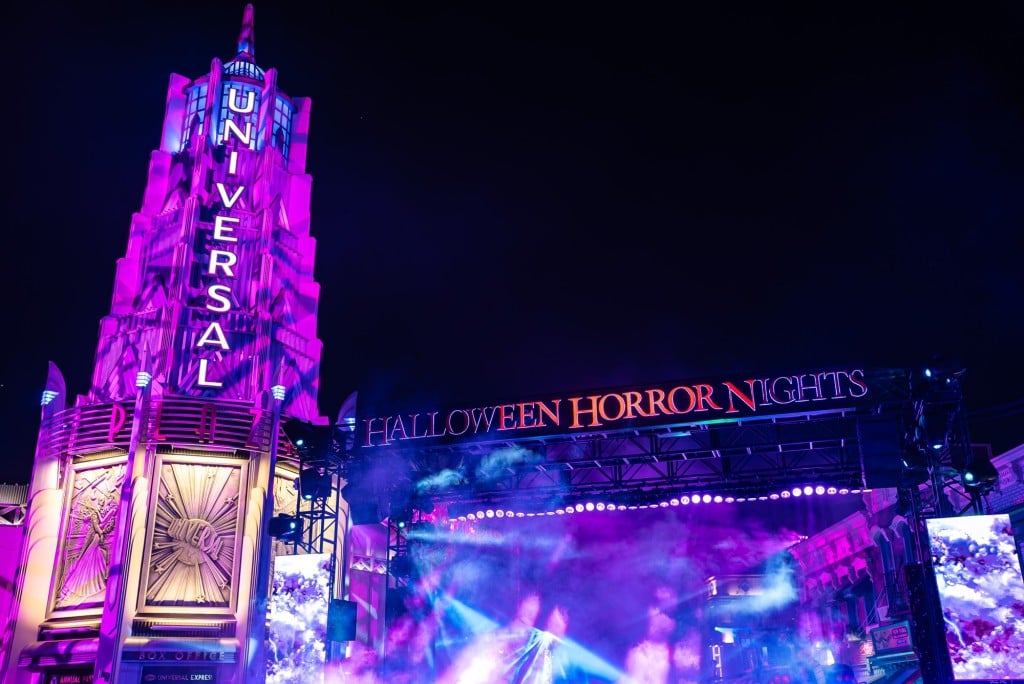
Halloween Horror Nights 35 is Universal Orlando’s longest yet, 49 nights from August 28 to November 1, so its opening weeks fell in the quarter Comcast just reported and its October peak falls in the quarter Comcast expects to stay soft. Neither the call nor the release mentioned the event.
Both of Halloween Horror Nights’ $399 Premium Scream Nights in Orlando, on August 27 and October 19, sold out, according to my Halloween Horror Nights tickets guide. Universal also added a $299.99 5-House R.I.P. Tour and held Universal Nights, Epic Universe’s first after-hours event, at $179.99 a ticket on October 3 and 17, which I wrote about in my K-shaped economy essay.
Universal Studios Japan and Hollywood
At Universal Studios Japan, “China-related travel restrictions continued to weigh on attendance and financial performance,” Armstrong said, and Comcast expects to start lapping that pressure in the fourth quarter. In September, he had said Chinese visitation in Japan “has dropped off a cliff.” The park’s Halloween Horror Nights still sold out its newest add-ons: the Express Pass 3+1 with guaranteed entry to Zanzo, the event’s first 18-and-up attraction, and Zanzo’s separate ticket were both gone for the season by October 11, in my Halloween Horror Nights Japan guide.
Universal Studios Hollywood “should benefit from the recent opening of the new Fast & Furious coaster,” Armstrong said. Comcast says Fast & Furious: Hollywood Drift is the park’s first high-speed outdoor roller coaster and the fastest coaster in the Universal Destinations & Experiences portfolio.
Disney’s April-to-June Quarter
Disney, which reported in August, said its U.S. parks and experiences revenue, which includes Disney Cruise Line, rose 11% from April through June, and attendance at its U.S. parks rose 3%. Disney said Walt Disney World had “a stand-out quarter, with healthy core attendance increases from domestic tourists and annual passholders, and effective summer promotions and new experiences that further supplemented growth.” Disney reports July through September, the same months as Comcast’s third quarter, in November.
The Parks Inside the NBCUniversal Spin-Off
The parks’ $780 million in adjusted EBITDA, down from $940 million a year earlier, was just ahead of the $769 million from Comcast’s Media segment, which includes NBC and Peacock and posted $247 million a year earlier. Both go to the new NBCUniversal when Comcast spins it off, which Comcast says is on track for mid-2027. Capital spending at Content & Experiences, the side of Comcast that includes the parks, the studios and NBC, fell 10.6% to $639 million in the quarter.
Universal Destinations & Experiences has a new chief brand and commercial officer, Luc Bondar, who came from United Airlines and started this week, and Randy Culbertson, until recently NBCUniversal’s chief financial officer, is joining as chief business officer, Cavanagh said. Comcast also expects a fourth-quarter charge of “over $1 billion,” related “mostly to our transformation efforts,” Armstrong said.
When Comcast announced the split in June, I covered what it means for the parks in my spin-off story and what it means for Halloween in my story on Universal’s Halloween bet.


